
Dust on the Devil's Road: A Roadhouse Blues for the Long Way Home | The Blues Dispatch
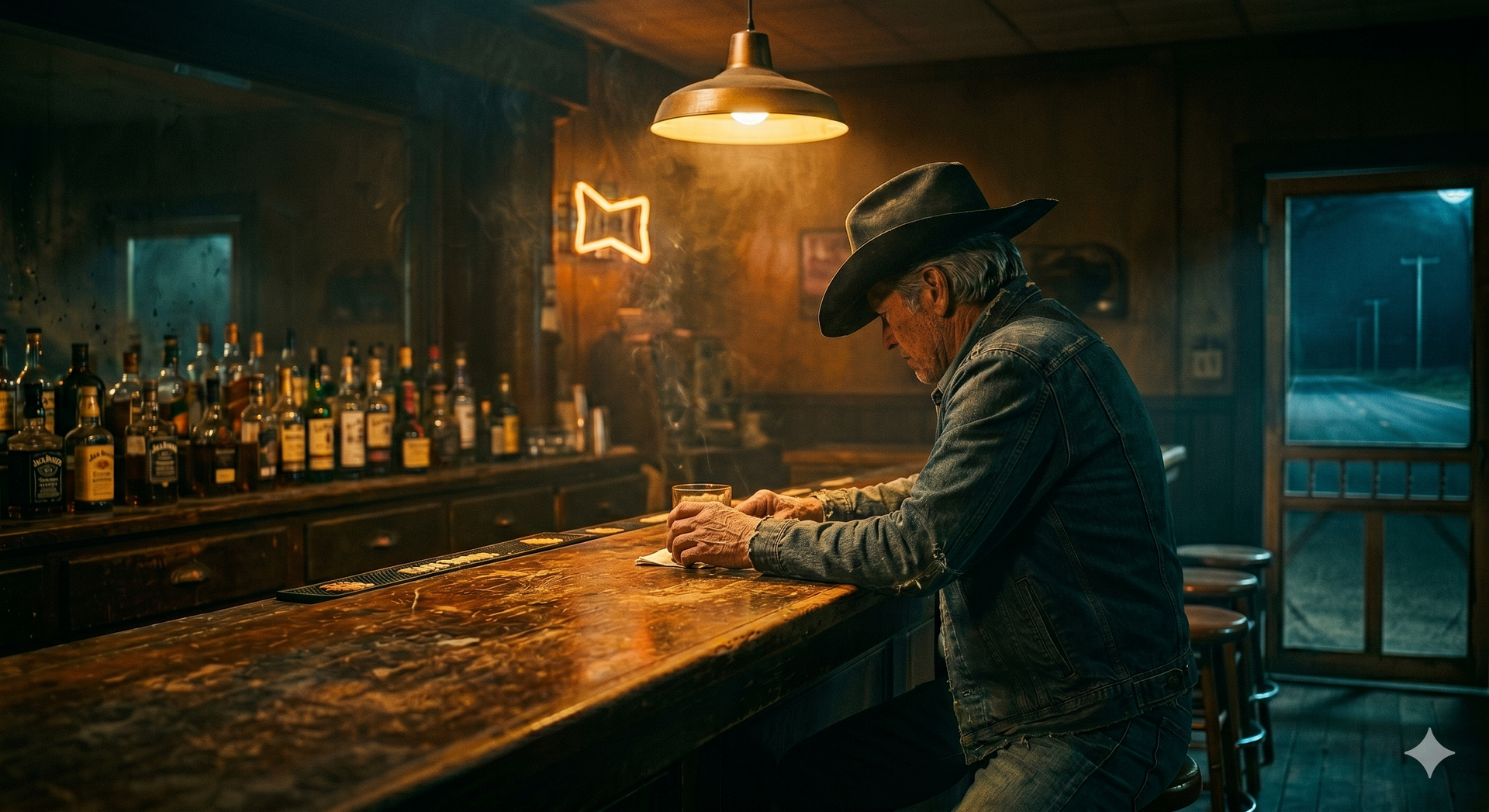
There's a particular kind of quiet that settles into a roadhouse around 2am. The jukebox has gone silent, the regulars have either gone home or stopped pretending they were going to. The bartender wipes the same spot on the bar he wiped twenty minutes ago. And somewhere out past the gravel lot, a truck shifts gears and disappears into a stretch of highway that doesn't have a name worth remembering.
That quiet is where "Dust on the Devil's Road" lives.

The Sound
This one is built on a slow-burning shuffle in the key of E, sitting just under 92 BPM — the tempo of a man thinking too hard. Slide guitar carries most of the weight, moaning over warm Hammond B3 organ swells while a walking bass keeps the floor underneath. The harmonica answers from the smoke. The vocal is weathered and gravelly, the kind of voice that sounds like it's been holding back something for years and finally decided not to.
The 12-bar structure is classic roadhouse, but the turnarounds breathe a little longer than usual. There's no rush in this song. It moves the way a regret moves — circling back, pretending to leave, never quite getting out the door.
The Story
The narrator is a man on the back end of a long mistake. He left someone behind in a kitchen — that's the first image you get, and it's deliberate. Kitchens are where real life happens. Bedrooms get the headlines, but kitchens are where people actually fall apart. He drove off swearing he'd never come back, and now he's a few hundred miles past the point where that promise meant anything.
"Now the moon's a coin I cannot spend And every mile's an old amen"
That's the heart of the song. The moon — the oldest symbol in blues — has become useless to him. And every mile he puts behind him is starting to sound like a prayer he doesn't quite believe anymore. The road, which used to mean freedom, has become a kind of penance.
The Roadhouse
The chorus puts him exactly where the song says he is — passing through one roadhouse light after another, and each one burning a little less than the love he walked away from. There's no triumph in that line. Just math. The kind of math a man does when he's been doing it too long.
"There's a pew somewhere with my name on it but the door's been closed for a long damn minute"
That's where the gospel undertone slips in. Roadhouse blues and gospel blues have always shared a fence line — the same struggle, just different rooms. This song stays on the bar side of that fence, but it knows the other side is there. It's a song about a man who knows where redemption is and isn't ready to walk in yet.
The Ending
The closing image — a slow goodbye on a dusty floor and a screen door slamming once more — wasn't accidental. Screen doors are the punctuation marks of Southern memory. They slam at the start of an argument and again at the end of a marriage. They slam when you're nine and you're being called for dinner, and they slam when you're forty-nine and you're leaving for the last time.
This song lets you decide which slam you're hearing.
Listen
"Dust on the Devil's Road" is out now on all major streaming platforms.
🎧 Spotify | Apple Music | Amazon Music | YouTube | Deezer | Tidal
Find it all at otisstoneblues.com.
The Blues Dispatch is a weekly journal from Otis Stone stories behind the songs, notes from the road, and the occasional sermon from the cheap seats. Subscribe at otisstoneblues.com/blog.