From Stovall Plantation to the South Side
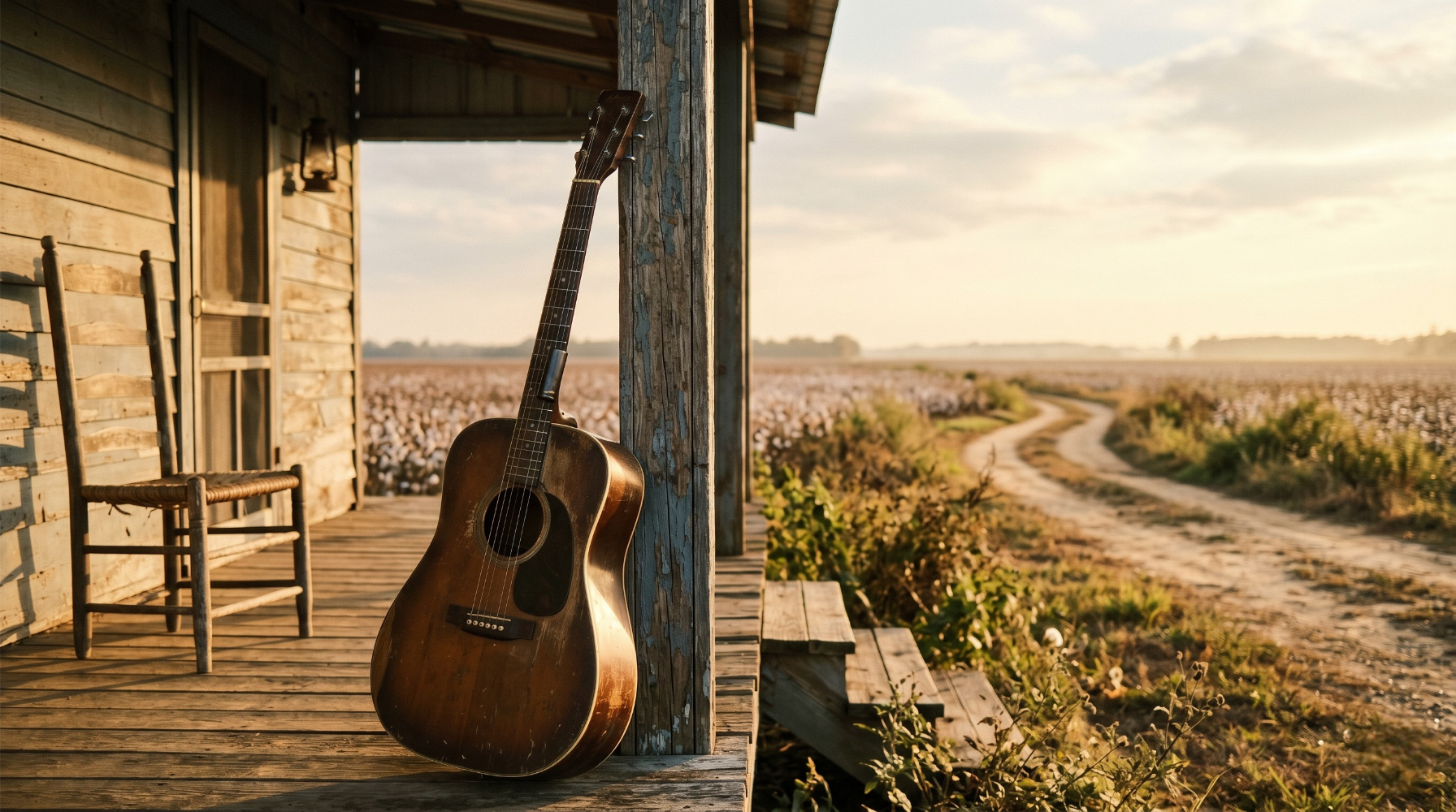
McKinley Morganfield was born in 1913 in Issaquena County, Mississippi. He grew up on Stovall Plantation near Clarksdale, in the heart of the Mississippi Delta, and earned the nickname Muddy Waters as a child for his love of playing in a muddy creek near his home. He learned guitar and harmonica as a young man, absorbing the Delta blues tradition from the ground up — attending fish fries and juke joints, listening to the older players, developing his own voice.
He was deeply influenced by
Robert Johnson and Son House — two of the greatest Delta blues musicians who ever lived — and by his early twenties he was playing the local circuit with a growing reputation as a serious talent. In 1941 and 1942, folklorist Alan Lomax traveled to Stovall Plantation to record Muddy Waters for the Library of Congress. Hearing himself on tape for the first time was a revelation. He knew he was good. He decided to go north.
In 1943 Muddy Waters boarded the Illinois Central Railroad and headed to Chicago with nothing but his guitar and his determination. He was thirty years old. He had no idea he was about to change the world.
Plugging In and Turning Up
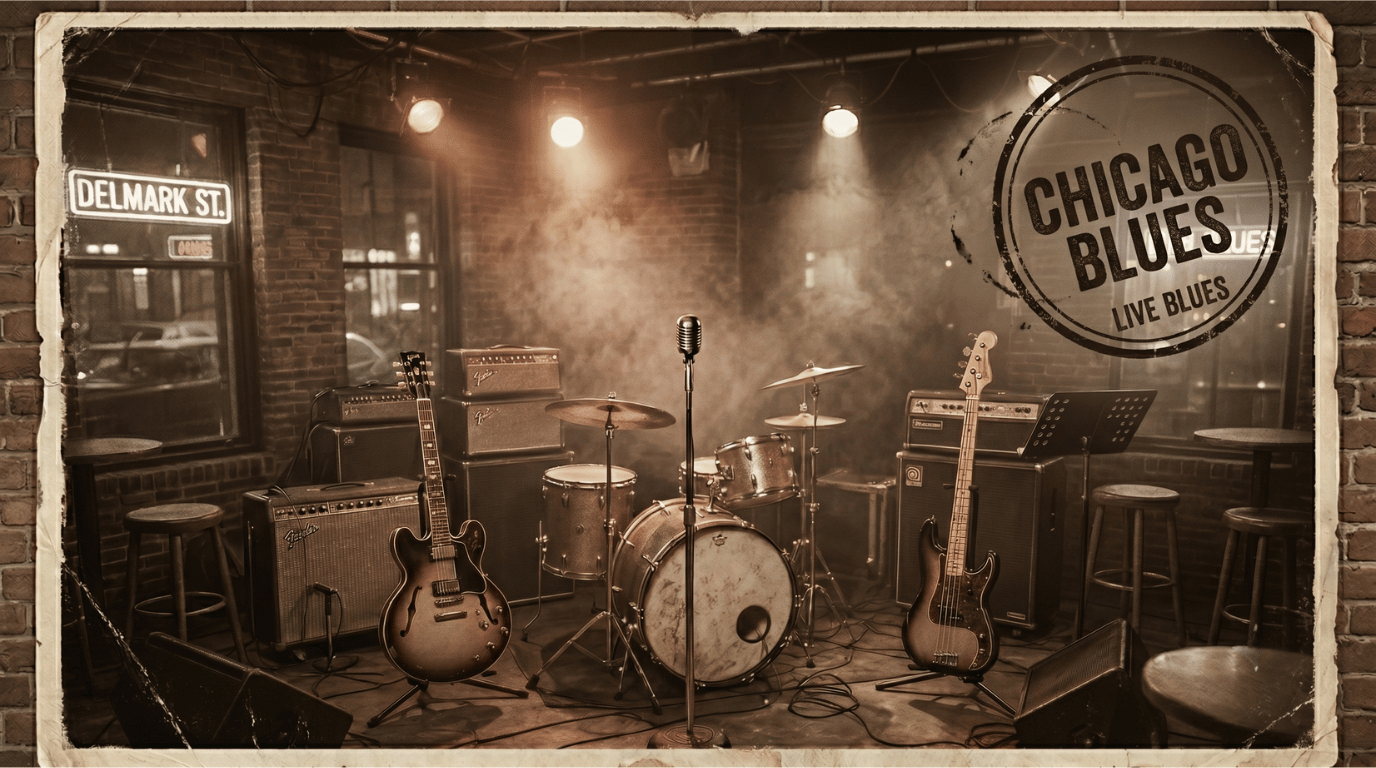
Chicago was loud and fast and nothing like the Delta. Muddy Waters quickly realized that his acoustic guitar wasn't going to cut through the noise of a crowded South Side tavern. He needed volume. He needed power. He needed an electric guitar.
What happened when he plugged in was something nobody had quite heard before. The Delta blues — that deep, sliding, intensely personal sound — suddenly had an electric edge that made it feel dangerous and thrilling. He assembled a band around him, adding bass, harmonica, piano, and drums, and the result was a full sound that filled every corner of every room he played in.
He signed with Chess Records in 1950 and the recordings he made there over the next decade are among the most important in the history of American music. Rollin' Stone, Hoochie Coochie Man, Mannish Boy, I'm Ready, Got My Mojo Working — these weren't just great blues songs. They were the blueprint for everything that came after.
The Man Who Inspired Everyone
It is almost impossible to overstate the influence Muddy Waters had on the musicians who came after him. The list of artists who cite him as a primary influence reads like a hall of fame of rock and blues royalty.
The Rolling Stones took their name directly from his song Rollin' Stone. When they traveled to Chicago in 1964 and got the chance to record at Chess Studios — the same studio where Muddy had recorded his classics — Keith Richards described it as a religious experience. Eric Clapton, widely considered one of the greatest guitarists who ever lived, has spoken about Muddy Waters with reverence that borders on awe. Jimmy Page, Bob Dylan, Jimi Hendrix — all of them point back to Muddy Waters as a foundational influence.
Even the young Bob Dylan, who adopted the name Dylan partly in tribute to the culture that produced Muddy Waters, understood that something unique and irreplaceable lived in that electric Delta sound.
When the British blues explosion of the 1960s sent Muddy Waters' music back to American audiences who had largely overlooked it, a whole new generation of fans discovered what they had been missing. Muddy Waters suddenly found himself playing rock venues and college campuses alongside artists he had directly inspired. The respect was mutual and the reunion of blues tradition with its rock and roll descendants was one of the most important musical moments of the decade.
The Legacy of a Giant
Muddy Waters continued recording and performing right up until the end of his life, never losing the fire that had driven him from Stovall Plantation to the stages of the world. He won six Grammy Awards, was inducted into the Rock and Roll Hall of Fame in 1987, and was named by Rolling Stone magazine as one of the greatest artists of all time.
He died in April 1983 in Westmont, Illinois. He was 70 years old.
But the music never died. Hoochie Coochie Man still sounds like the first day it was recorded. Mannish Boy still commands every room it enters. And the electric Chicago Blues sound that Muddy Waters built from nothing on the South Side of Chicago still runs like a current through virtually every form of popular music played anywhere in the world today.
He didn't just electrify the blues. He electrified everything.