Imagine packing everything you own into a single bag, boarding a northbound train, and leaving behind the only world you've ever known. That was the reality for millions of Black Americans between 1910 and 1970, as they left the rural South in search of something better, better wages, better treatment, better lives. They carried their families, their faith, and their culture. And tucked inside all of it, like a heartbeat nobody could silence, they carried the blues.
What happened when that music hit the streets of Chicago changed American music forever.
What Was the Great Migration?
The Great Migration is one of the most significant demographic shifts in American history. Beginning around 1910 and accelerating dramatically after World War II, an estimated six million Black Americans left the rural South. Mississippi, Alabama, Georgia, Arkansas and headed north to cities like Chicago, Detroit, Cleveland, and New York.
The reasons were both push and pull. The South offered poverty, racial violence, sharecropping, and the constant threat of Jim Crow laws that kept Black Americans locked in a system designed to break them. The North offered factory jobs, better wages, and the promise not always delivered, but real enough to chase of a more dignified life.
Chicago was the destination of choice for many who left Mississippi. The Illinois Central Railroad ran a direct line from the Delta straight up to the city, and word spread fast through communities that Chicago was where opportunity lived. Tens of thousands made the journey every year, settling primarily on the city's South Side, transforming neighborhoods and building a new world out of the one they'd left behind.
And the music came with them.
From Acoustic to Electric — The Delta Sound Gets Loud
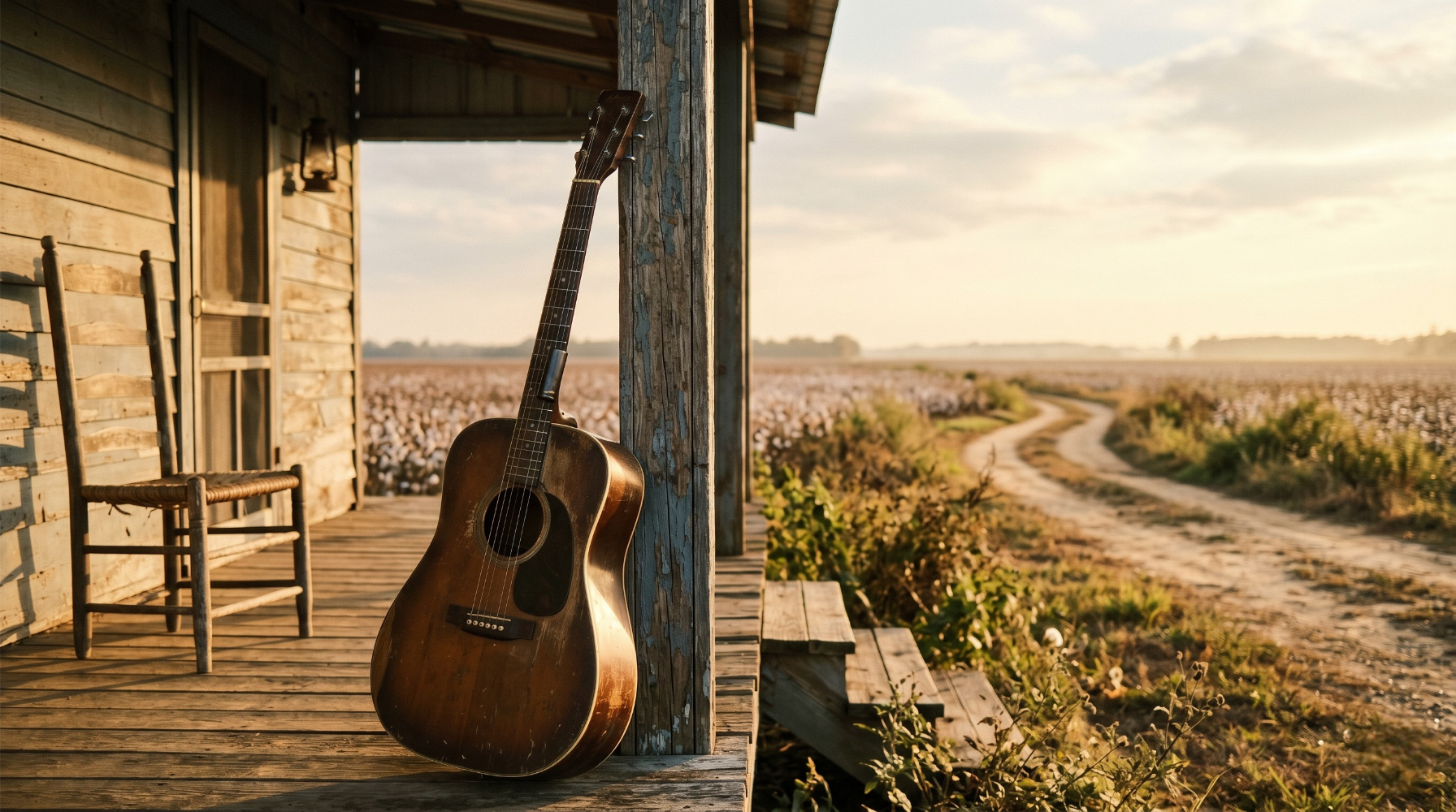
The blues that arrived in Chicago from the Mississippi Delta was raw, acoustic, and deeply personal. It was one man with a guitar on a front porch, or a small juke joint with a single light bulb swinging overhead. It was intimate music made for intimate spaces.
Chicago was not an intimate city.
The South Side was loud full of factories, traffic, crowded taverns, and the roar of a city that never slowed down. An acoustic guitar simply couldn't cut through the noise. So, the musicians did what blues musicians have always done they adapted.
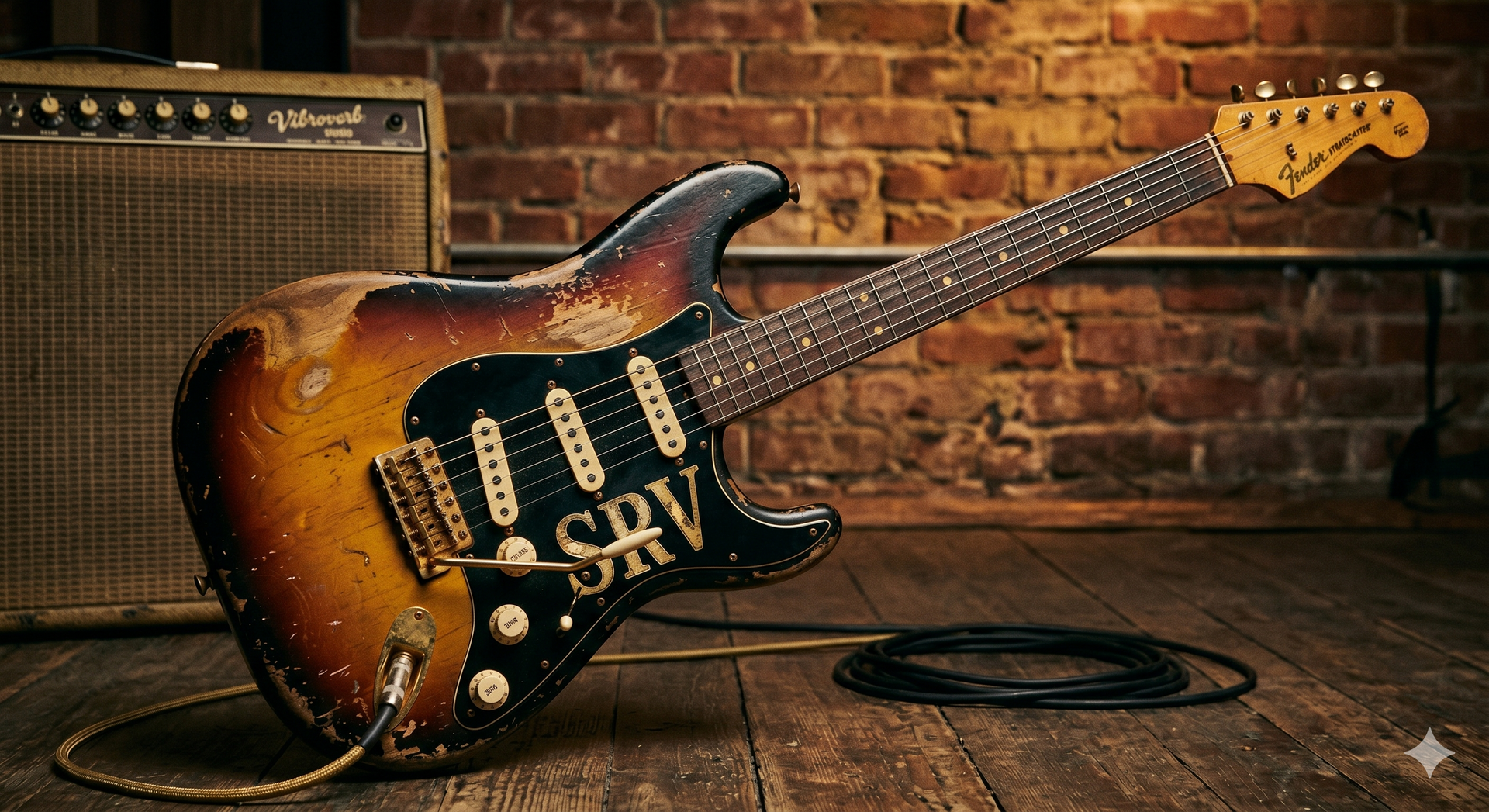
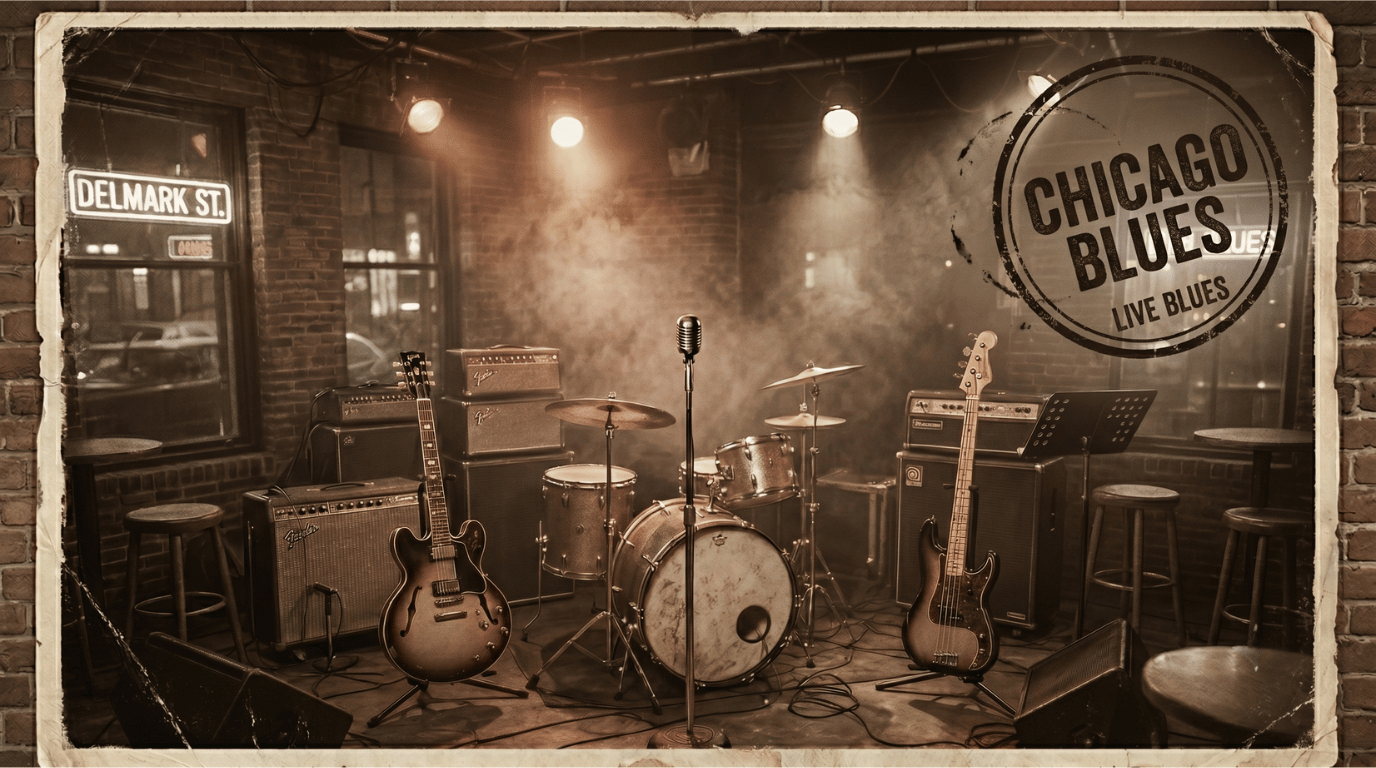
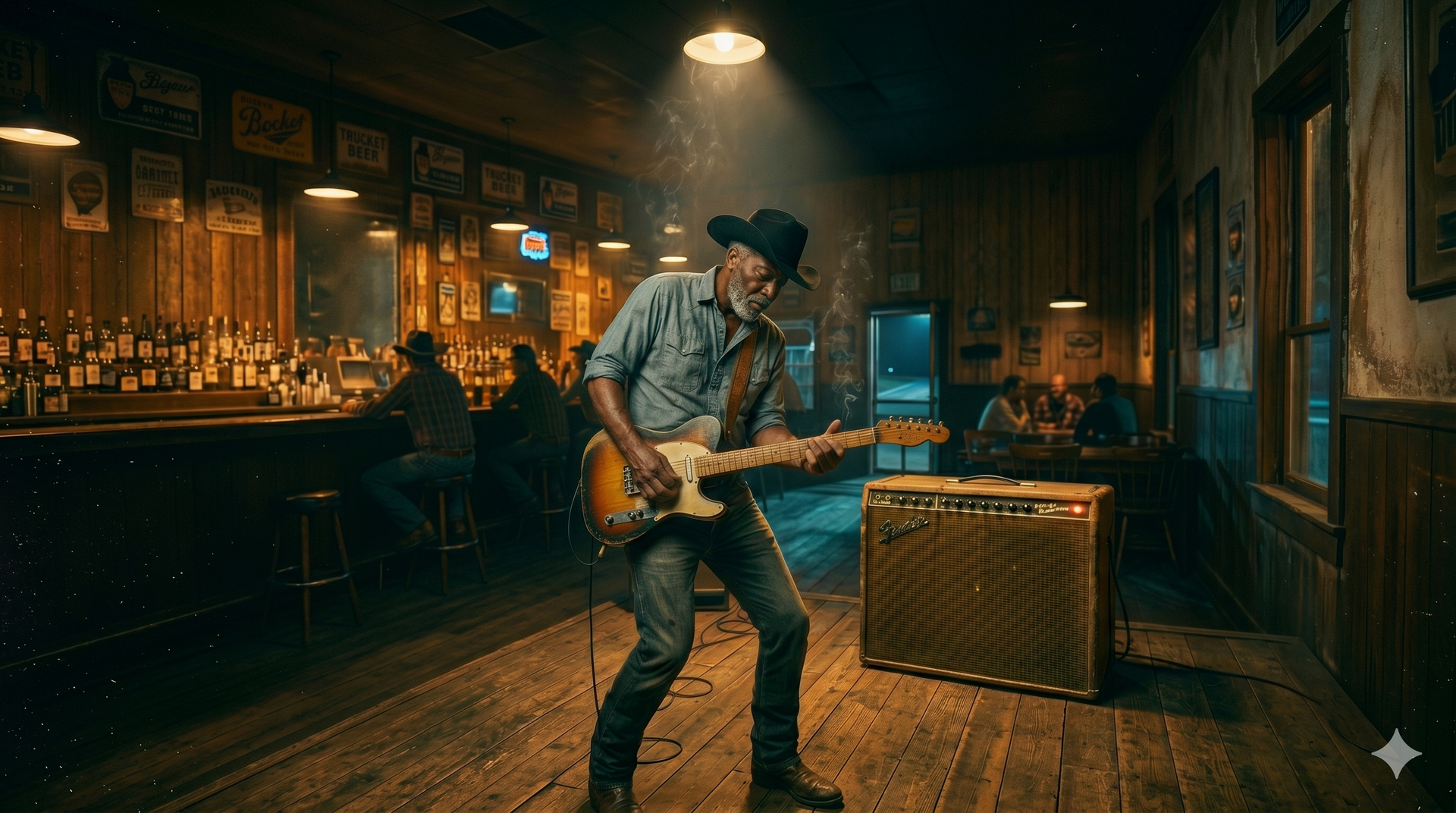
The electric guitar changed everything. Plugged in and amplified, the Delta sound suddenly had teeth. It could fill a room, rattle a window, shake a floor. The lone acoustic guitarist became a full band. Electric guitar, bass, harmonica, piano, and drums — and the music grew into something bigger and more powerful than anything that had come before.
This was the birth of Chicago Blues.
The Men Who Built the Chicago Sound
A handful of artists defined the Chicago Blues sound and in doing so shaped the entire future of popular music.
Muddy Waters arrived in Chicago from Clarksdale, Mississippi in 1943. He had learned his craft in the Delta, absorbed the spirit of
Robert Johnson, and brought it north with him. Once he plugged in and formed his band, the transformation was complete. His electric guitar work was ferocious and authoritative. Nobody sounded like him. Songs like Hoochie Coochie Man and Mannish Boy became anthems, and his Chess Records sessions in the late 1940s and 1950s became some of the most influential recordings in music history.
Howlin' Wolf made a similar journey, arriving in Chicago from Mississippi with a voice that sounded like it came from somewhere deep underground. His raw, physical performances were unlike anything audiences had heard — even other blues musicians found him startling. Together with Muddy Waters he defined what Chicago Blues meant.
Little Walter took the harmonica, a humble instrument often treated as a supporting player and turned it into a lead instrument by amplifying it through a microphone and a small amp. The sound he created was something entirely new, a wailing, bending tone that became as central to Chicago Blues as the electric guitar itself.
And behind all of them was Willie Dixon, bassist, songwriter, and one of the most important behind-the-scenes figures in blues history. Dixon wrote or arranged dozens of the defining Chicago Blues recordings and served as a bridge between the raw Delta tradition and the polished but still gritty Chess Records sound.
Chess Records and the Sound of a City
No story of Chicago Blues is complete without Chess Records. Founded in 1950 by Leonard and Phil Chess on the city's South Side, Chess became the label that captured the Chicago Blues sound and sent it out into the world. Muddy Waters, Howlin' Wolf, Little Walter, Sonny Boy Williamson, Chuck Berry, and Bo Diddley all recorded for Chess.
The sound that came out of that studio was electric, literally and figuratively. It was blues with urgency and power, music that felt like the city it came from. And when those records made their way across the Atlantic to England in the late 1950s and early 1960s, they landed like a lightning bolt. The Rolling Stones, Led Zeppelin, Eric Clapton, and the entire British blues explosion that followed can be traced directly back to those Chess Records sessions on the South Side of Chicago.
The Delta to Chicago pipeline didn't just transform American music. It transformed music worldwide.
A Legacy That Never Fades
The Great Migration was a story of hardship, resilience, and the unbreakable human spirit. The people who made that journey north carried something with them that no amount of hardship could take away, a musical tradition so deep and so powerful that it became the foundation of everything that came after.
The blues moved north. And in doing so, it moved the whole world.