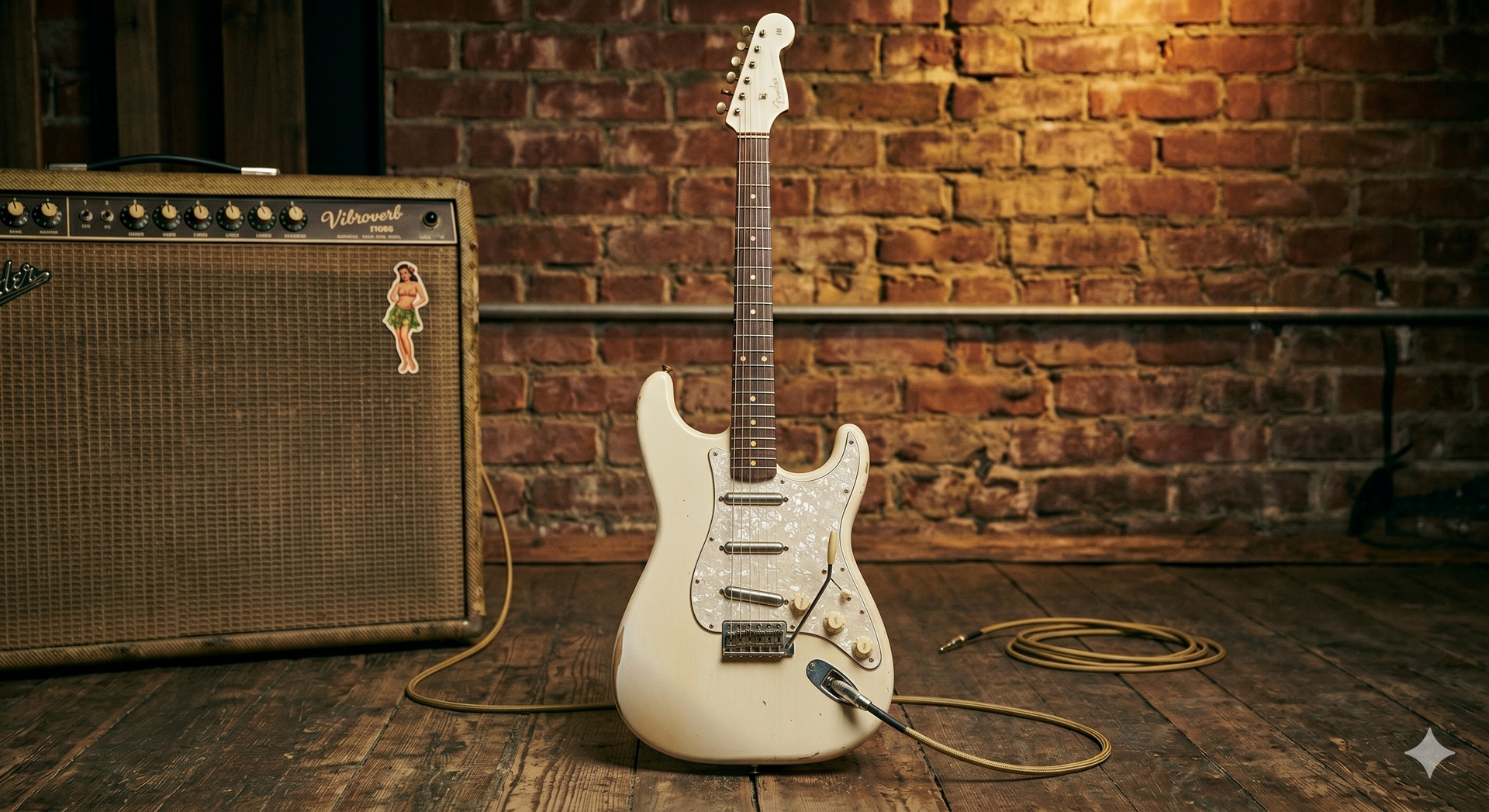

Heavy Strings & Battle Scars: The Legendary Guitars of Stevie Ray Vaughan

Paul Johnson • May 29, 2026

Share this article

When you think of Texas blues, you don't just hear the music you see the instrument. Specifically, you see a battered, sunburst Fender Stratocaster stripped down to the bare wood, violently vibrating under the hands of a master.


Stevie Ray Vaughan didn't just play his guitars; he waged war with them. Alongside his legendary guitar tech, René Martinez, SRV treated his instruments like custom hot rods—constantly modifying, swapping, and pushing them to their absolute limits.


If you've ever wondered what gave SRV that massive, signature tone, let’s dive into the legendary axes behind the magic.

SRV

1. "Number One" (The First Wife)

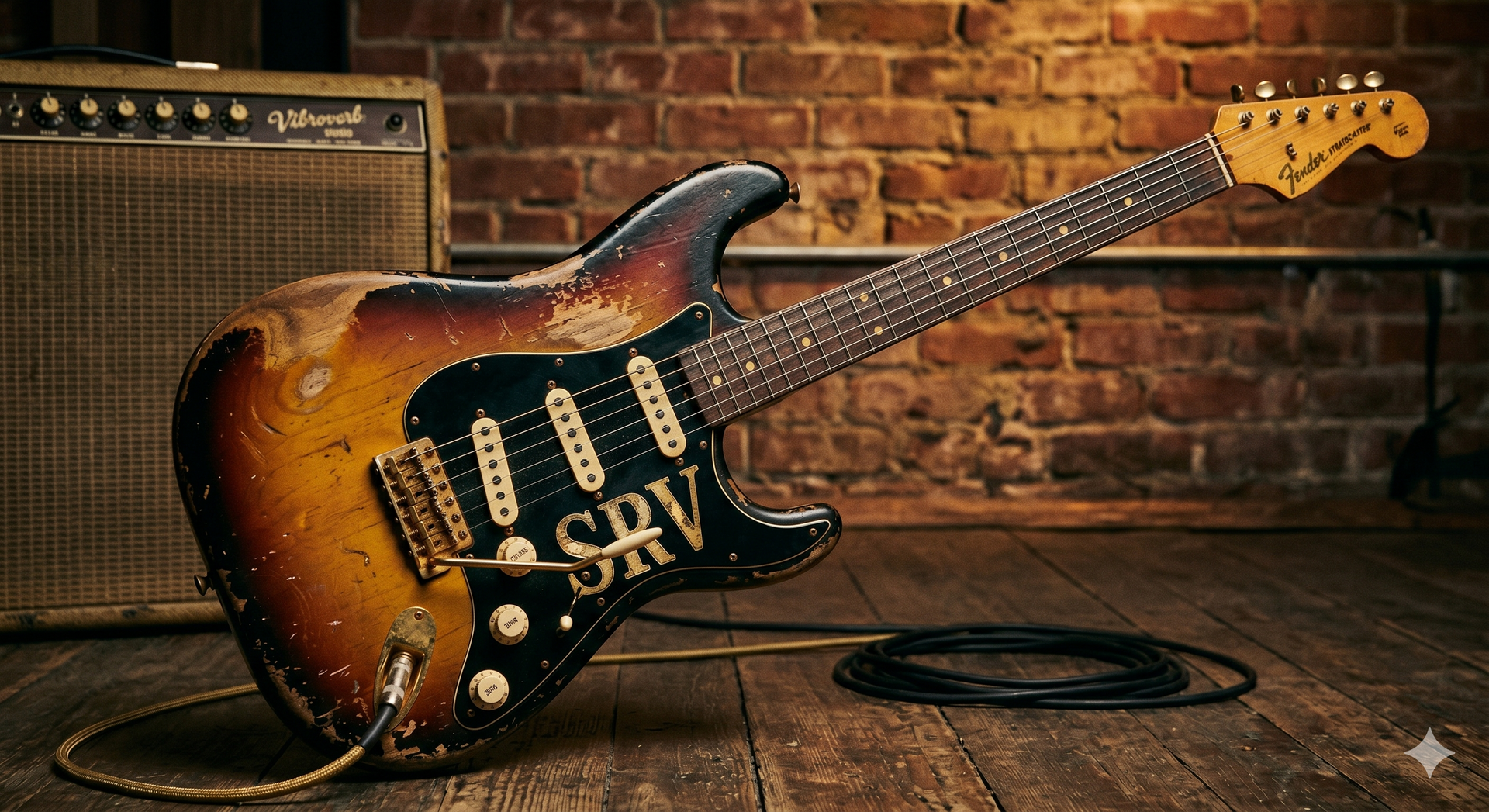
This is the holy grail of blues history. If you've ever seen a photo of Stevie, chances are he was cradling this heavily abused 1960s Stratocaster. Stevie affectionately called it his "First Wife."

While he always referred to it as a 1959 model (because the pickups were dated '59), later teardowns by the Fender Custom Shop revealed it was actually a beautiful Frankenstein monster of parts:

  • The Body: A 1963 alder body.
  • The Neck: A 1962 maple neck with a rosewood fingerboard.
  • The Left-Handed Tremolo: As a massive Jimi Hendrix disciple, Stevie had a gold, left-handed vintage tremolo bridge installed. This placed the whammy bar above the strings, completely changing how he manipulated pitch during his fiery solos.

By the end of his career, "Number One" had been refretted so many times that the fingerboard was practically flat, and the wood was deeply stained with years of sweat, stage grime, and pure passion.

SRV Guitar

2. "Lenny" (The Soul Machine)

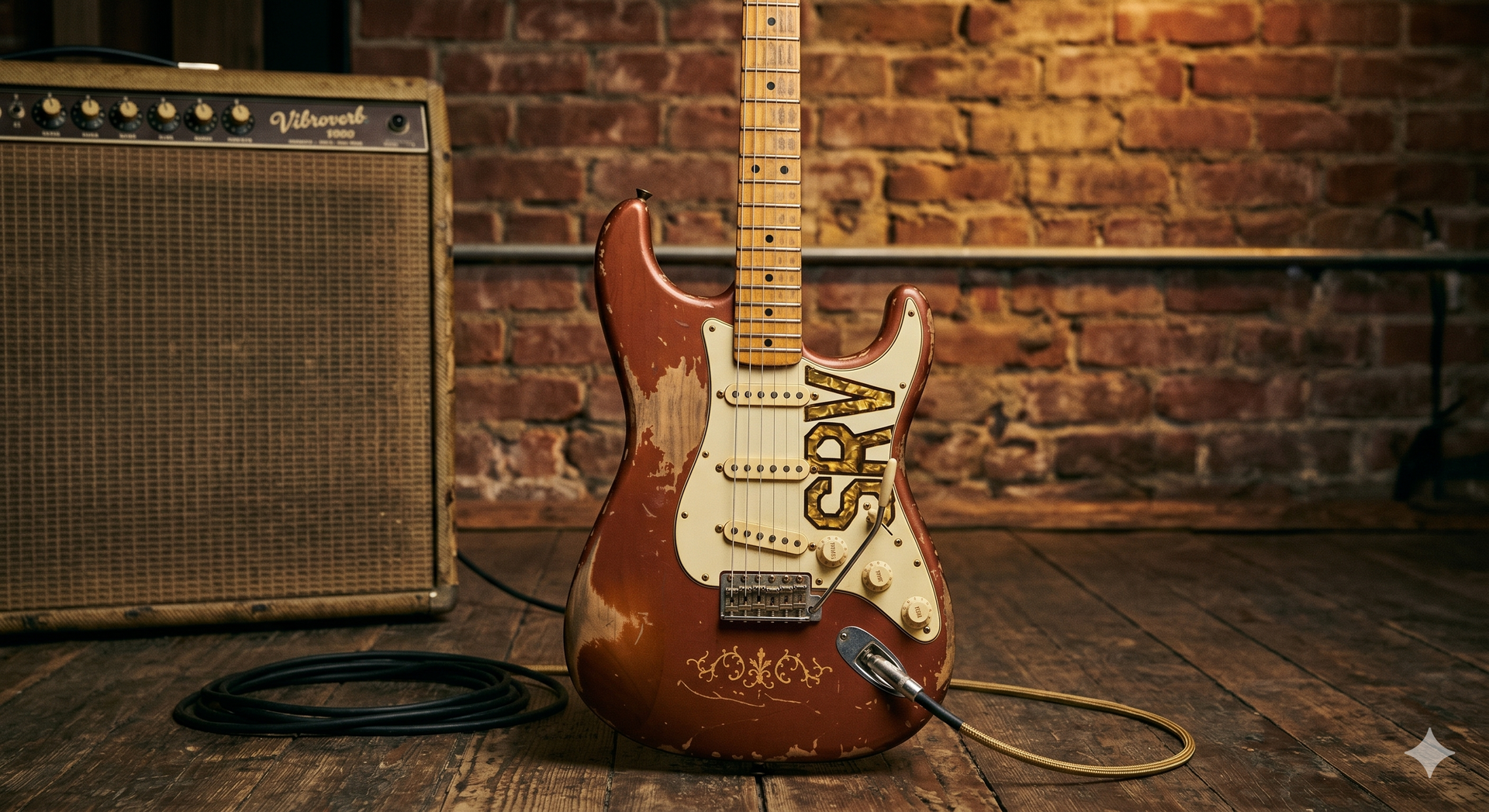
Every guitar tells a love story, but this one is special. In 1980, Stevie spotted a beautiful, dark-stained 1965 Strat in an Austin pawnshop. It was $350—a sum he simply didn't have at the time.


His wife, Lenora ("Lenny"), secretly pooled $50 chunks from several of their friends to buy it for his birthday. Moved by the gesture, Stevie stayed up all night and penned the legendary, liquid-smooth instrumental track "Lenny" on it.


Unlike the aggressive bite of Number One, "Lenny" had a much mellower, brighter tone. It was easily identifiable by an intricate, mandolin-style butterfly inlay routed directly into the wood behind the bridge.

SRV Guitar

3. "Charley" (The Lipstick Strat)

Built for him in 1983 by his close friend Charley Wirz (owner of Charley’s Guitar Shop in Dallas), this stark white, custom Strat-style guitar brought a totally different flavor to Stevie's sonic arsenal.


Instead of standard Fender pickups, "Charley" was loaded with three Danelectro lipstick tube pickups. They gave the guitar a distinct, chiming, hollowed-out tone that cut through a mix like a razor blade. Stevie famously used this guitar to play "Life Without You," a track he often dedicated to Wirz's memory after his passing.

The SRV Blueprint: Why His Tone Sounded Monstrous

You can’t talk about SRV’s guitars without talking about his brutal setup. Most guitarists would struggle to squeeze a single note out of Stevie's rigs. He achieved that earth-shaking sustain through sheer physical force and a few extreme specifications:


  • The "Log" Strings: While most blues players prefer thin, bendable strings (like .009s or .010s), Stevie wrapped his guitars in heavy-gauge wire, usually starting at a massive .013 and ending at .058.


  • The E-Flat Drop: To prevent those massive strings from snapping the guitar neck in half (and to better match his vocal range), he tuned down a half-step to E-flat standard.


  • Skyscraper Action: Stevie liked his string action set incredibly high. His philosophy? Give the strings room to vibrate cleanly without slapping the frets, resulting in maximum bell-like sustain.


  • Bass-Sized Frets: He swapped out standard frets for massive Dunlop 6100 jumbo fretwire just so his fingers could actually grip and bend those heavy strings.
"He used to adjust the screws down at the bridge to raise the height, and I would run out of thread—I couldn't make the strings any higher." René Martinez, SRV's Guitar Tech

Over to You, Blues Fans!

Stevie proved that tone isn't just bought off a shelf; it's forged through sweat, modifications, and a refusal to play softly.


Which of SRV’s legendary guitars is your favorite? Do you prefer the raw power of "Number One" or the smooth, soulful tones of "Lenny"? Let me know in the comments below!

Recent Posts

Vintage image of the Blues Club in Chicago
By Paul Johnson May 19, 2026
Discover what Chicago blues is, how it transformed American music, and the legendary artists who built the electric sound that changed the blues forever.

Otis Stone Blues Cover for Brown Sugar Moon
By Paul Johnson May 11, 2026
Read about the new blues song release, Brown Sugar Moon by Otis Stone. A late-night soul blues love song. Get romantic, get in the mood with this song.
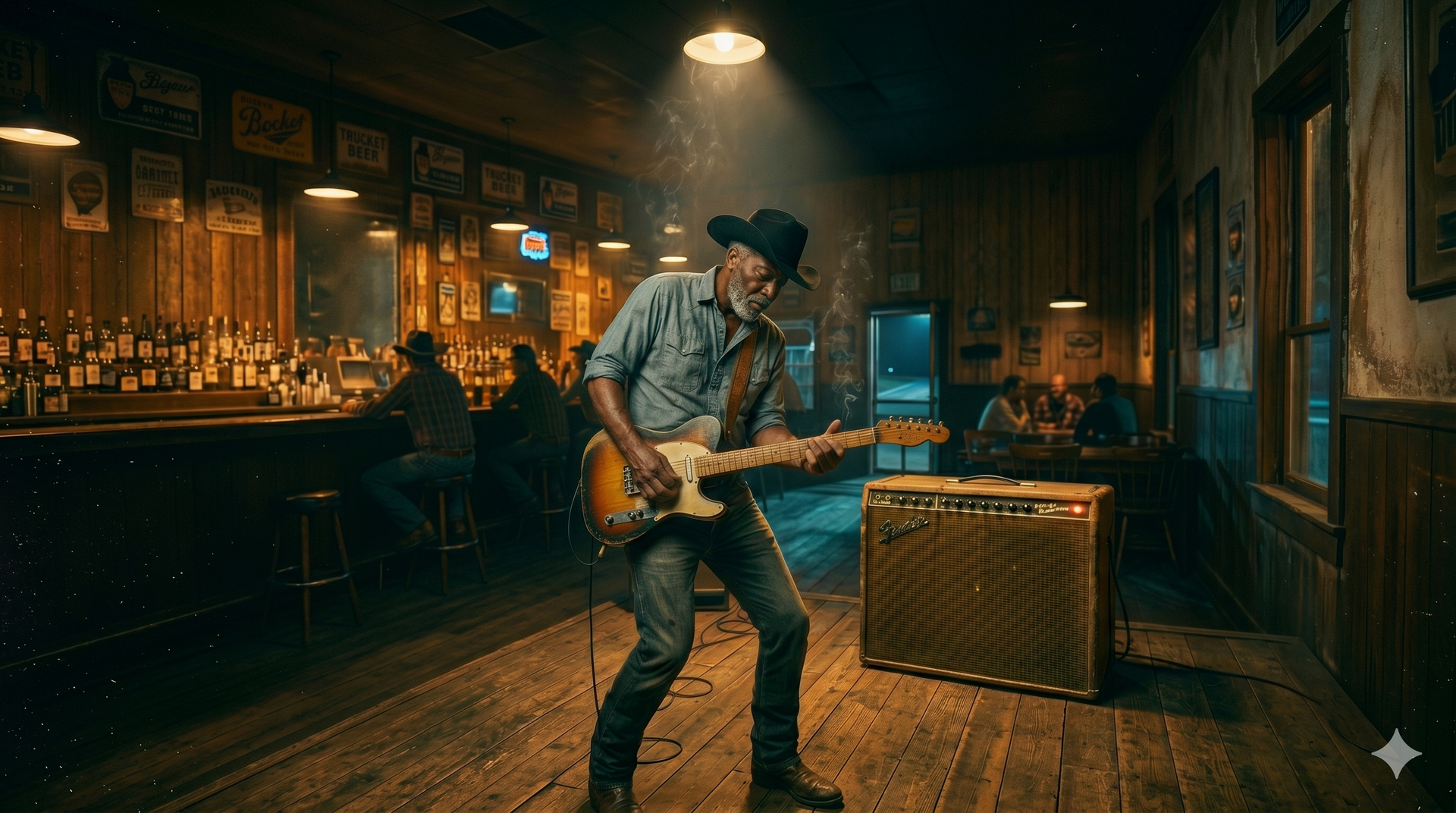
Texas Roadhouse for Blues musician Otis Stone
By Paul Johnson May 3, 2026
Behind "Dust on the Devil's Road" — a slow-burning roadhouse blues about regret, redemption, and the highways that hold both. Listen and read the story.

New Orleans Jazz Blues Cover Art
By Paul Johnson April 21, 2026
Otis Stone's New Orleans Jazz Blues is a cinematic journey through the haunting nocturnal soul of the French Quarter — muted trumpet, brushed drums, pure noir.

By Paul Johnson April 15, 2026
New Blues track by Otis Stone Blues. “Hallelujah Blues” is more than a song; it is a narrative of struggle, redemption, and resilience. Read and listen here.

2026 Blues Music Awards
By Paul Johnson April 13, 2026
The 2026 Blues Music Awards hit Memphis on May 7. Here's your guide to Album of the Year contenders and the Marcia Ball Hall of Fame induction.
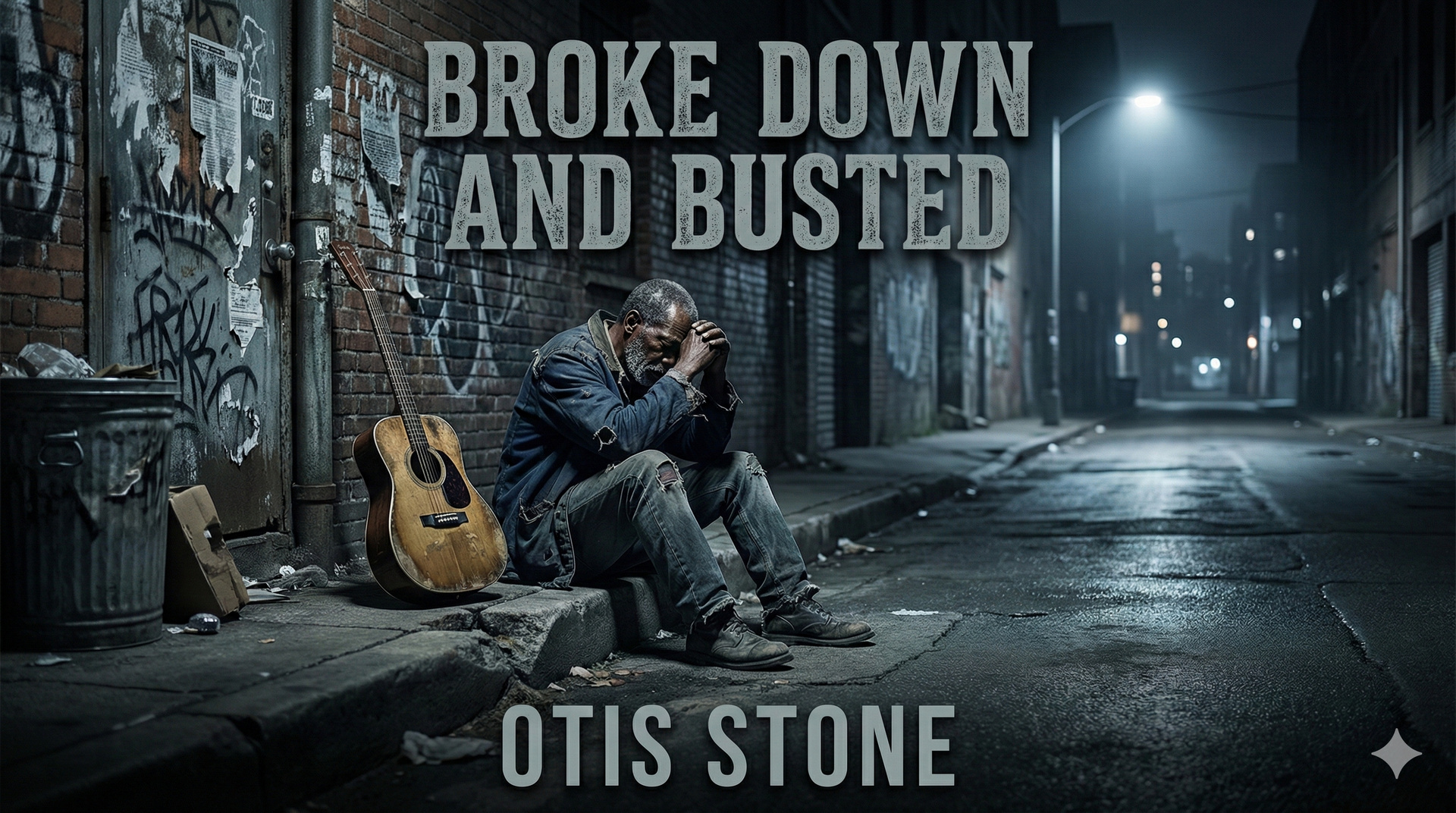
Broke Down and Busted cover art for Otis Stone blues
By Paul Johnson April 7, 2026
Otis Stone's new original track "Broke Down and Busted" is a raw, slow-burning hard-times blues anthem about hitting rock bottom. Stream it now on all platforms.
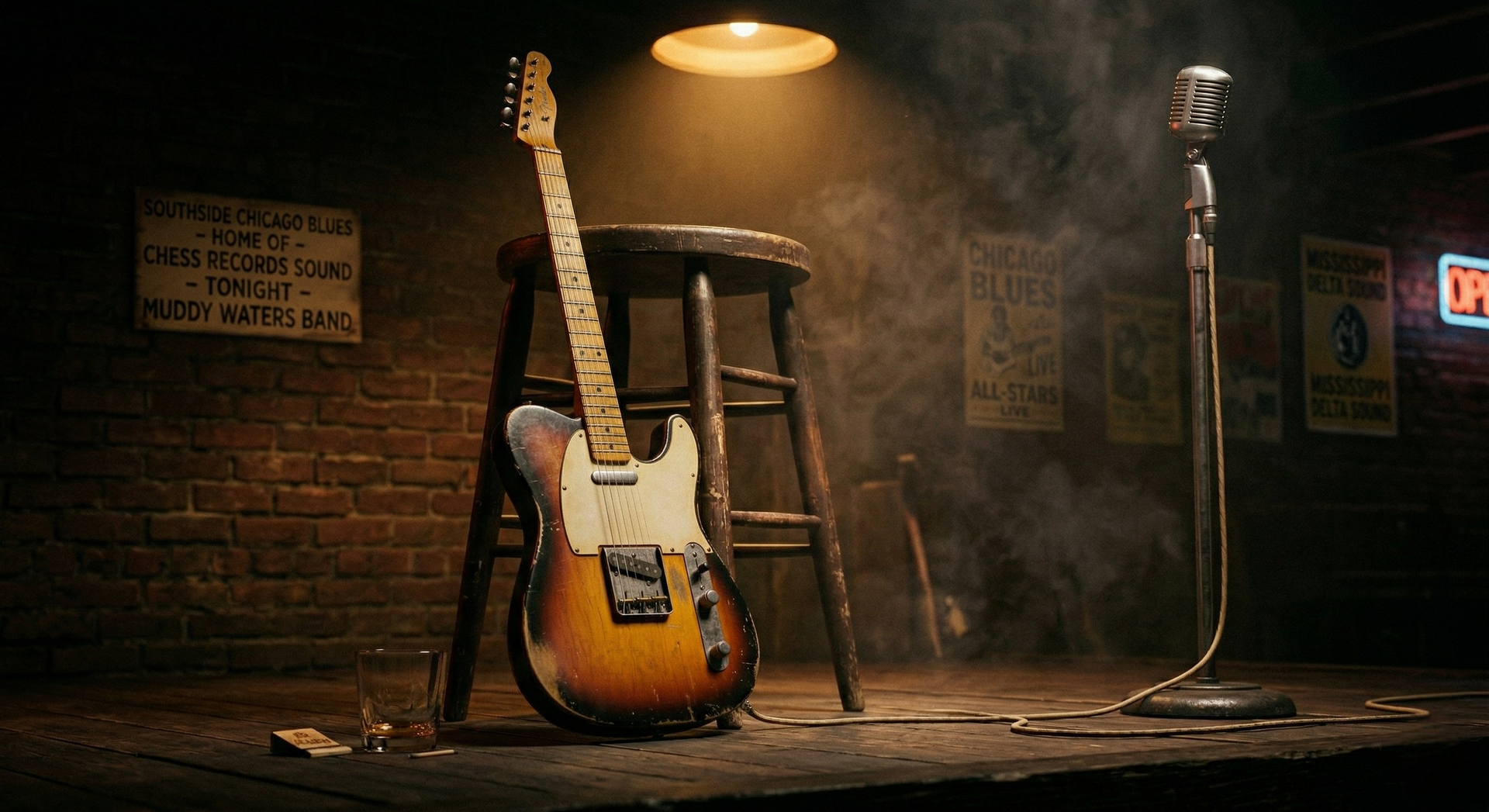
A vintage sunburst Fender Telecaster electric guitar on a Chicago blues club stage
By Paul Johnson April 1, 2026
Muddy Waters left the Mississippi Delta for Chicago and changed music forever. The story of the man who electrified the blues and inspired generations of artists.
A 1940s Chicago South Side blues club at night with neon signs glowing and crowds gathered outside o
By Paul Johnson March 25, 2026
The Great Migration carried millions of Black Americans from the South to Chicago and brought the blues with them. The story of how Delta music became electric.
A desolate Mississippi Delta crossroads at midnight under a full moon with fog over empty dirt roads
March 18, 2026
Robert Johnson recorded just 29 songs and died at 27, yet his influence on blues and rock is unmatched. Discover the legend, the myth, and the music.
Show More