The Problem the ES-335 Was Designed to Solve
To understand why the ES-335 mattered, you have to understand the problem it was built to fix.
In the 1950s, blues players had two choices, and neither was perfect.
A
hollow-body electric guitar, like the Gibson L-5 or ES-175, sounded warm, woody, and full. It had the resonance of an acoustic guitar with the volume of an amplifier. But hollow-bodies had a serious problem: at high volumes, they would feed back uncontrollably. The hollow chamber would amplify the amp's own signal, creating an unwanted howl that made loud playing nearly impossible.
A
solid-body electric guitar, like the Fender Telecaster or the Gibson Les Paul, fixed the feedback problem. Solid bodies didn't resonate the same way, so they could be cranked through loud amplifiers without howling. But they lost the warm, complex tone of a hollow-body. They sounded sharper, more cutting, less alive.
Gibson's design team, led by Ted McCarty, set out to build something that could do both. Their solution was a semi-hollow body.
What Makes the ES-335 Different
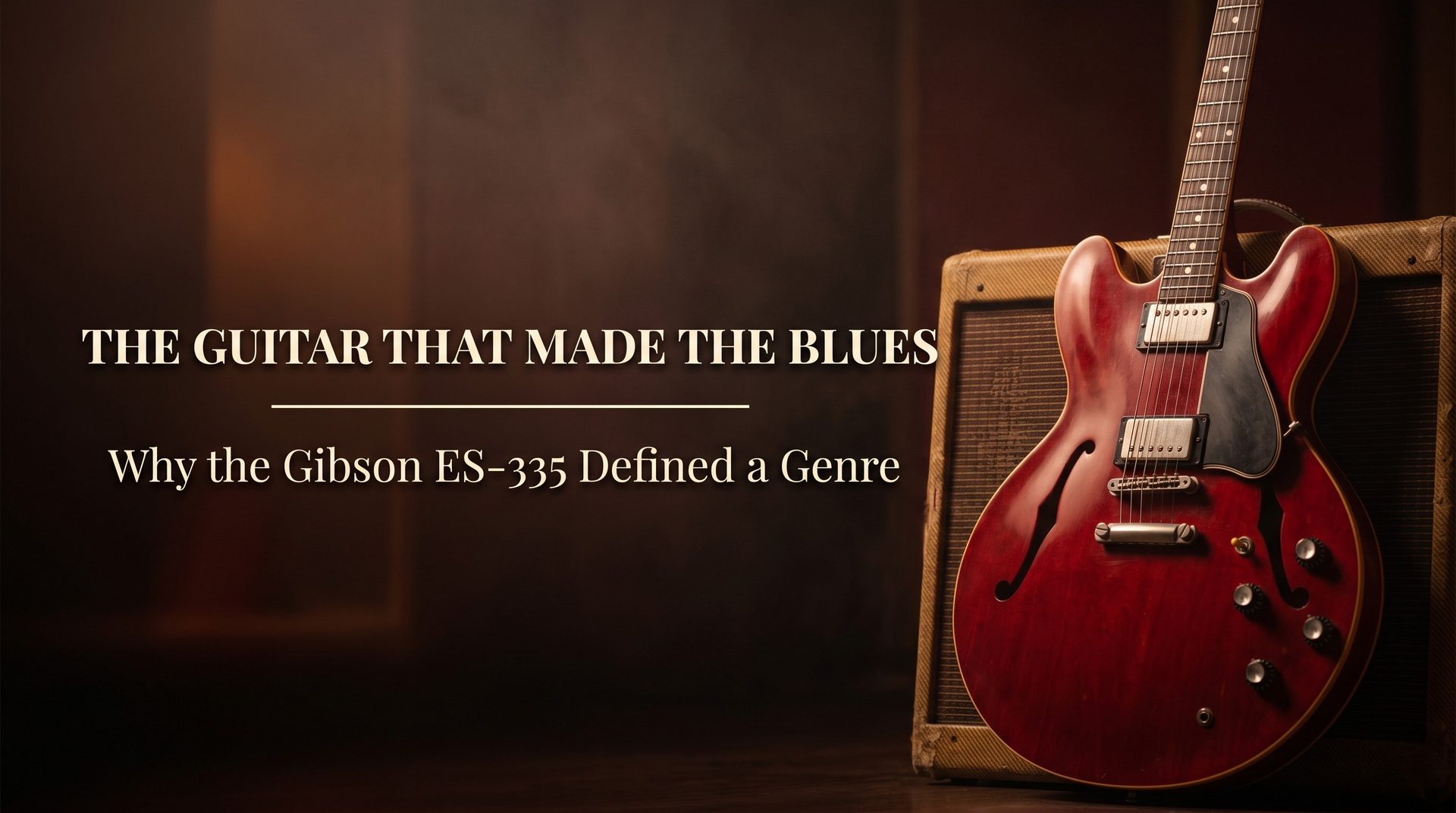
The ES-335 looks like a hollow-body from the outside. It has the classic double-cutaway shape, f-holes on the top, and a thinline arched body. But inside, running down the center of the guitar, is a solid block of maple.
That center block is the secret. It anchors the bridge and pickups to a piece of solid wood, which kills most of the feedback problem. But the wings of the body on either side of the block are still hollow, which preserves the warm, breathing resonance that hollow-body players loved.
The result is a guitar that has, in a sense, two personalities. Played clean and quiet, it has the depth and complexity of an archtop. Pushed through a cranked tube amplifier, it growls and sustains like a solid-body. For a blues player, that's not a compromise. That's a superpower.
A few other specs worth knowing:
- Two humbucking pickups, designed by Seth Lover, which reject the buzzing hum that plagued single-coil pickups in early electric guitars
- A 24.75 inch scale length, slightly shorter than a Fender, which produces a warmer, looser feel under the fingers and easier string bending
- A mahogany neck and rosewood fingerboard on the original models, contributing to the guitar's warm midrange voice
- A solid maple center block bonded between two thin layers of laminated maple for the body, giving the guitar its distinctive structural design
These specs sound technical, but they all add up to one thing: a guitar that sings the way blues players want to sing.
The Players Who Made It a Legend
The ES-335 wouldn't be the blues icon it is today without the artists who chose it and never let it go.
B.B. King
is the most important name here. King played a custom version of the ES-335 called Lucille for almost his entire career, from the early 1960s until his death in 2015. He had Gibson modify the design to remove the f-holes (he didn't like the feedback that even a semi-hollow body could produce at his volumes), but the core of the guitar was pure ES-335. His vibrato, his sustain, his note choice, all of it became inseparable from that guitar's voice. When most people imagine the sound of blues guitar, they're imagining B.B. King playing an ES-335.
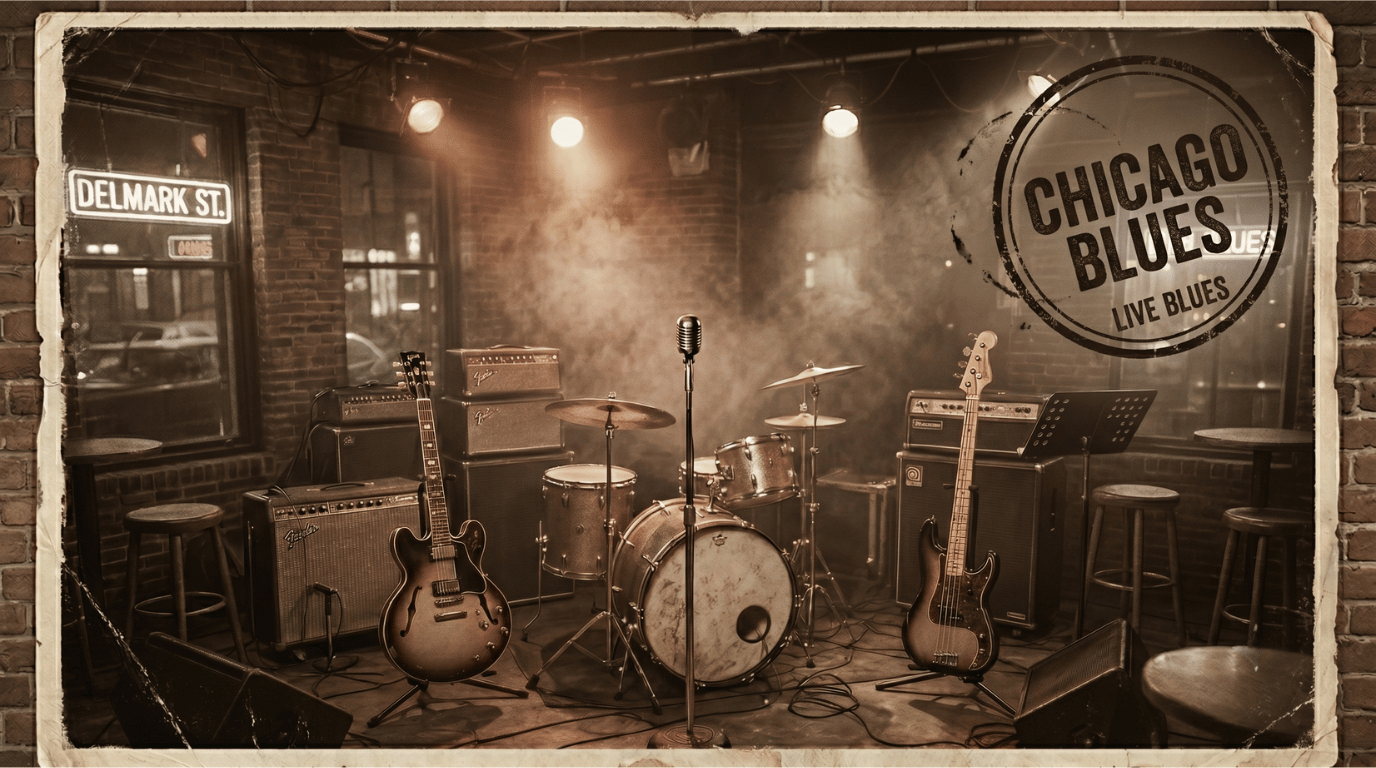
Freddie King played a Gibson ES-345, the slightly more deluxe cousin of the ES-335, and his aggressive, biting tone became one of the defining sounds of
Chicago blues guitar.
Eric Clapton
played an ES-335 during his time with John Mayall's Bluesbreakers and Cream, and his work on those records helped introduce the guitar to a generation of British blues rock players. He still owns and plays the same 1964 ES-335 he bought in his early twenties.
Chuck Berry, though more rock and roll than blues, played his ES-335 (and the related ES-355) all over the records that bridged the gap between blues and the new rock and roll sound of the late 1950s and 60s.
Larry Carlton and
Lee Ritenour brought the ES-335 into jazz-blues territory in the 1970s, showing that the guitar could handle sophisticated harmony just as well as it handled raw blues.
Even players who didn't make the ES-335 their primary guitar, like Muddy Waters, benefited from the broader Gibson semi-hollow design philosophy that the ES-335 popularized.
Each of these players brought out something different in the guitar. That versatility, the way the ES-335 could sound like B.B. King's smooth vibrato or Clapton's bluesy howl, is part of why it became so dominant.
Why the Sound Works for the Blues
There's a reason the ES-335 sits at the center of blues guitar tone, and it's not just history or branding. It's physics.
The blues, more than almost any other genre, is built on sustained, expressive notes. A blues guitar player doesn't just play scales. They bend strings, hold notes, let them ring out and decay, and use vibrato to give those notes a vocal quality. The ES-335 is built for exactly that.
The semi-hollow body gives notes a long, warm decay. The humbucking pickups produce a thick, smooth signal without the harsh edges that single coils sometimes add. The shorter scale length makes bending easier and gives the guitar a slightly slack, vocal feel under the fingers. The center block keeps everything stable at high volumes, so a blues player can dig in hard without losing control.
Put all of that together and you have a guitar that, in a real sense, mimics the human voice. That's why blues players gravitate to it. When B.B. King played a note on Lucille, it sounded like he was singing through the guitar. That's not a coincidence. That's the guitar doing exactly what it was designed to do.
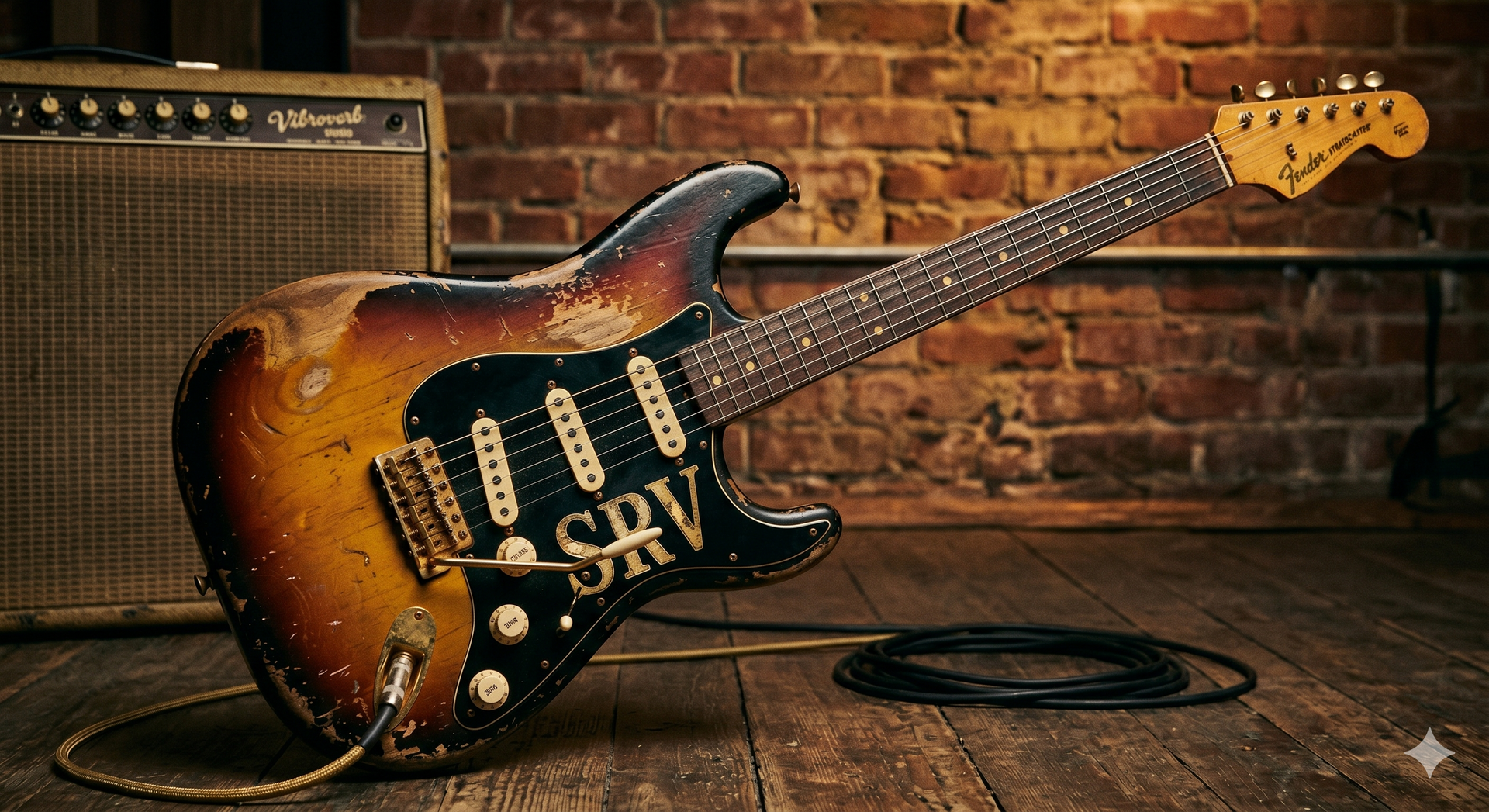
Not every blues player chooses an ES-335. Some, like
Stevie Ray Vaughan with his beloved Stratocaster, built their sound on completely different guitars. But the ES-335 has earned a place in blues history that few other instruments can match.
The ES-335 Today
The ES-335 has stayed in continuous production from 1958 until today, which is rare for any guitar design. Gibson still makes it. Players still buy it. And blues musicians, from established names to young players just starting out, still reach for it when they want that particular sound.
You can hear ES-335s on modern blues records from artists like Joe Bonamassa (who owns dozens of them), Gary Clark Jr., Christone "Kingfish" Ingram, and Marcus King. Each of them brings something different to the guitar, but they all share that same recognizable voice underneath, the warm growl, the singing sustain, the unmistakable midrange bloom.
If you've ever heard a blues guitar tone that made you stop what you were doing and listen, there's a good chance an ES-335 was somewhere in the signal chain.
A Guitar That Earned Its Place
Most guitars are tools. The Gibson ES-335 became something more. It became the voice of an entire genre, the instrument that millions of people associate with the sound of the blues even if they couldn't name the guitar by sight.
That doesn't happen by accident. It happens because a guitar gets the right combination of design, sound, and players together at the right moment in history. The ES-335 did that in 1958, and almost 70 years later, it's still doing it.
The blues will keep evolving. New players will pick up new instruments. But the ES-335 has earned its place at the center of the story, and it isn't going anywhere.
Hear the ES-335 Tradition in Modern Recordings
The semi-hollow body sound that the ES-335 helped define still shapes modern blues recordings. A few Otis Stone tracks that draw from that electric blues tradition:
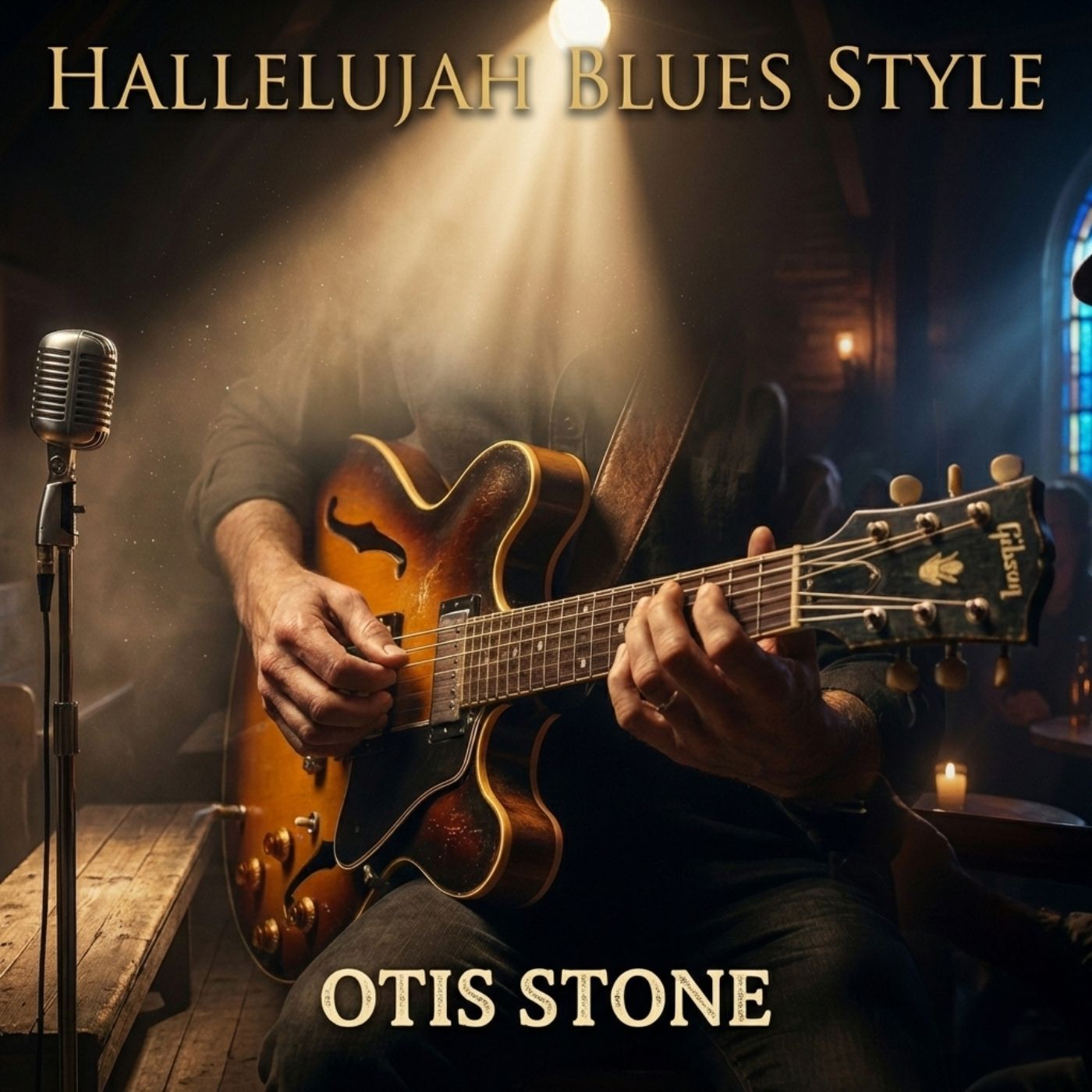
Hallelujah Blues — a soulful electric blues track built on the warm, singing tone the ES-335 helped popularize.
Dust on the Devil's Road — a slow-burning roadhouse blues with the kind of sustained, vocal guitar phrasing the ES-335 was designed for.