Where Delta Blues Came From
The Mississippi Delta isn't actually a river delta. It's the floodplain that stretches from
Memphis down to Vicksburg, a flat, fertile crescent of land that became one of the largest cotton-producing regions in America. By the late 1800s, that land was worked almost entirely by Black sharecroppers, many of them descended from the enslaved people who had built the plantations a generation before.
The blues grew out of that life. It carried echoes of West African musical traditions, work songs sung in the fields, spirituals from Sunday morning church services, and the field hollers that workers used to call out to each other across long rows of cotton.
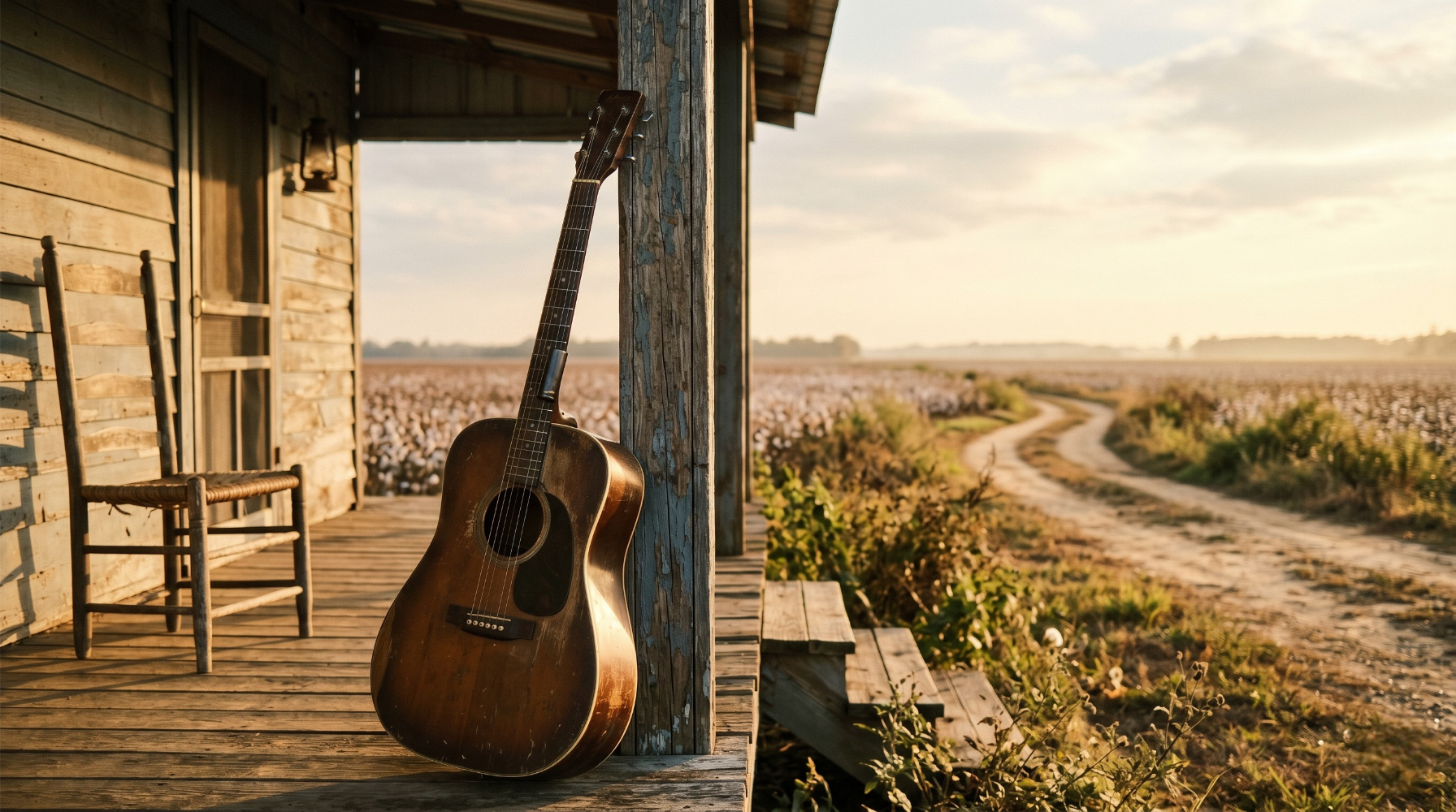
By the early 1900s, those threads had braided into something new. A guitar player would sit on a porch or a juke joint stage and sing about the things he knew. Hard labor. Loss. Love. The Lord. The road. A woman who left. A man who couldn't stay. The blues didn't ask for permission and it didn't need an audience. It was, first and last, a way to survive.
The Sound of Delta Blues
Delta blues has a sound you can identify in three seconds. The ingredients are simple, but the effect is haunting.
- Acoustic guitar, usually steel-stringed, often played with a slide made from a bottleneck or a piece of pipe
- A single voice, raw and unpolished, delivered with conviction more than technique
- A driving, percussive rhythm, often from the guitarist stomping a foot or tapping the body of the instrument
- Lyrics built on repetition, usually a 12-bar AAB structure where the first line is sung, repeated, and answered
- A heavy, hypnotic groove, even in slower songs, that pulls you in and won't let go
There's no band. No drum kit. No bass player. Just a man, a guitar, and a story. That simplicity is the whole point. Delta blues is music stripped down to its core, and somehow the smaller it gets, the bigger it feels.
The Players Who Built the Sound
A handful of artists turned Delta blues into a tradition that would influence nearly every form of popular music to follow.
Charley Patton is often called the father of the Delta blues. He played hard, drank hard, traveled the Delta circuit, and recorded a string of sides in the late 1920s that still sound startling almost a century later. His voice growled, his guitar drove forward, and his stage presence made him a legend before anyone called him one.
Son House brought a fierce, almost preacher-like intensity to the music. A former minister, his vocals carried the weight of the pulpit even when he was singing about sin. Songs like "Death Letter" and "John the Revelator" sit at the crossroads of gospel and blues in a way nobody else managed.
Robert Johnson has become the most famous Delta bluesman, partly because of his music and partly because of the legend that grew around him. The story goes that he sold his soul to the devil at a Mississippi crossroads in exchange for his guitar skills. The truth is probably less dramatic. He worked hard, listened harder, and recorded 29 songs in two sessions before dying at 27. Those 29 songs would later influence everyone from Eric Clapton to the Rolling Stones to Bob Dylan.
Skip James brought a different flavor, a higher voice, an unusual minor-key guitar tuning, and an unsettling beauty to songs like "Devil Got My Woman" and "Hard Time Killing Floor Blues."
Bukka White, Mississippi John Hurt, Mississippi Fred McDowell, and Big Joe Williams rounded out a generation of players who all contributed something different to the tradition. Each one had a style. Each one had a voice. Each one carried a piece of the sound forward.
Why Delta Blues Still Matters
Almost every form of popular music that came after the blues owes a debt to the Delta.
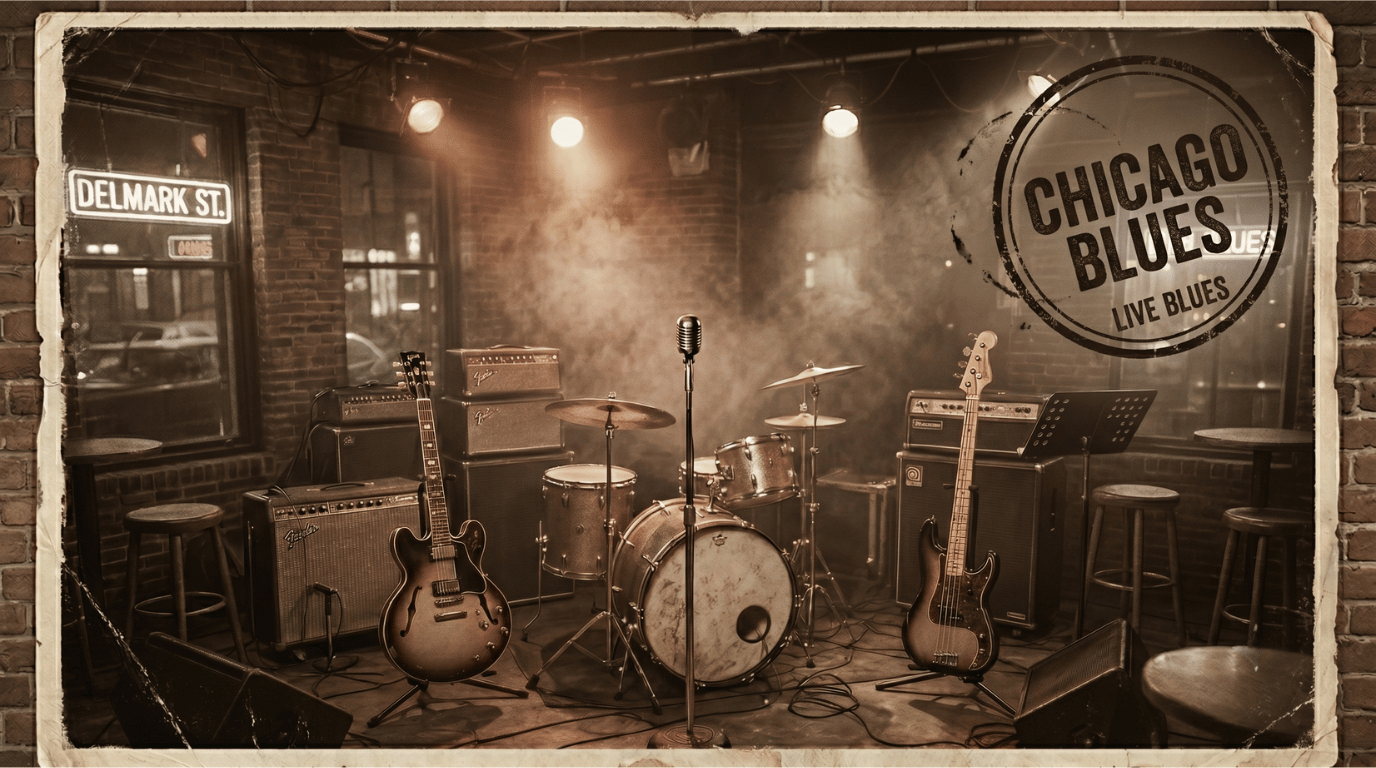
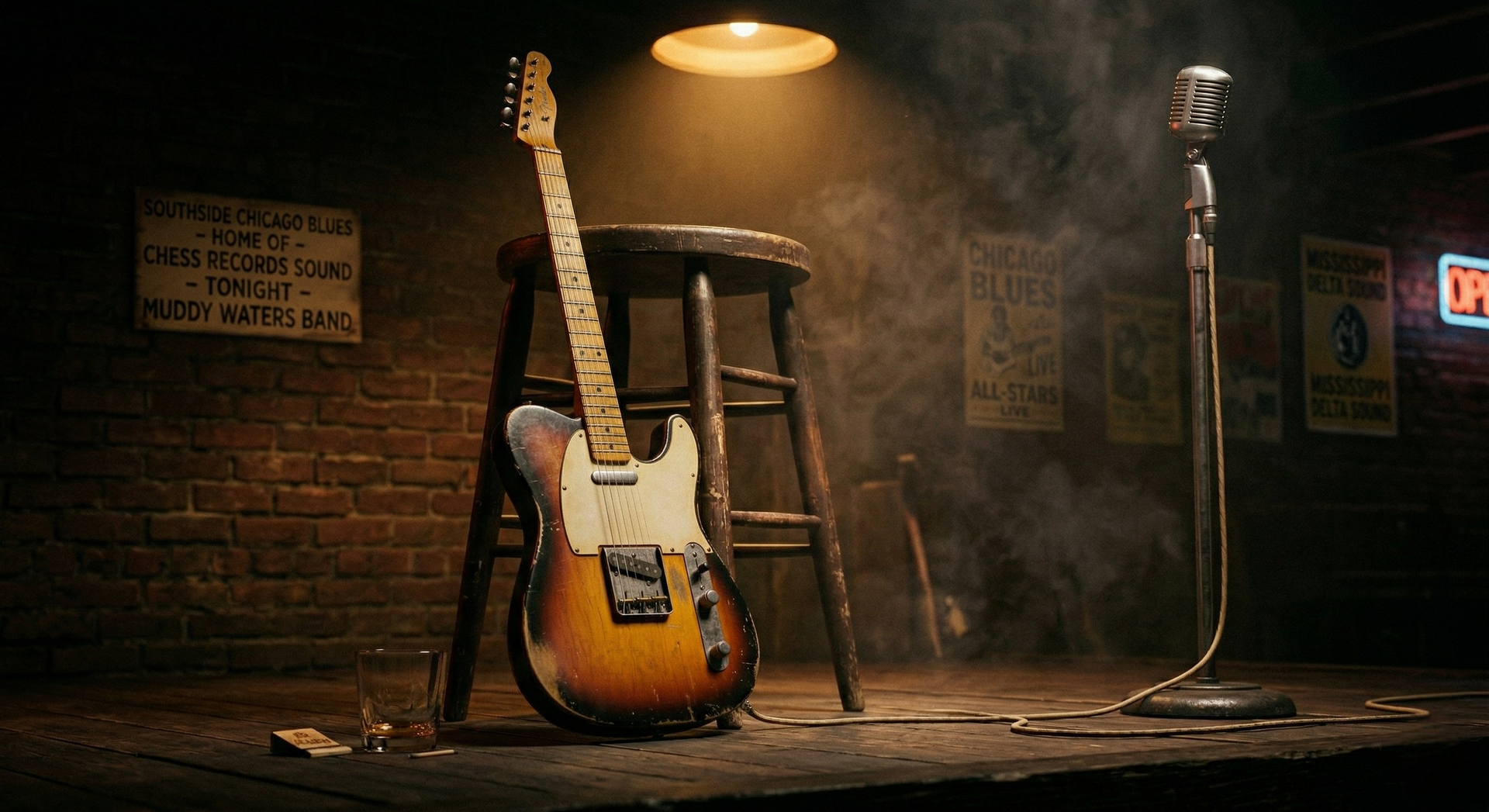
Chicago blues took the Delta sound and plugged it in, with
Muddy Waters leading the way as the man who carried the Delta tradition north and made it electric. That
migration northward is its own story, one of millions of people leaving the South in search of work and bringing their music with them.Rock and roll borrowed the rhythm and the swagger. The British blues revival of the 1960s, the bands like the Rolling Stones, Cream, Led Zeppelin, Fleetwood Mac, was essentially a generation of young English musicians falling in love with Delta blues records and reinterpreting them through their own lens.
But beyond the influence, Delta blues still matters because it offers something rare. Honesty. There's no studio production, no auto-tune, no big budget hiding behind the performance. It's a person sitting down with a guitar and telling the truth. In a world full of polish, that kind of music is more valuable than ever.
For more on how Delta blues evolved when it moved north, see our guide to Chicago blues.